sQRH 4.5 — the Winter 2026-27 hold-over tables
Hold-over time data expires. Every year, ahead of the northern winter, the FAA and Transport Canada republish their tables — fluids are approved, fluids are withdrawn, and the numbers behind the ones that remain can move. An app carrying last season’s tables is not merely out of date; in a de-icing decision it is misleading. So the release that matters most is the unglamorous one that lands every August. This is it for sQRH.
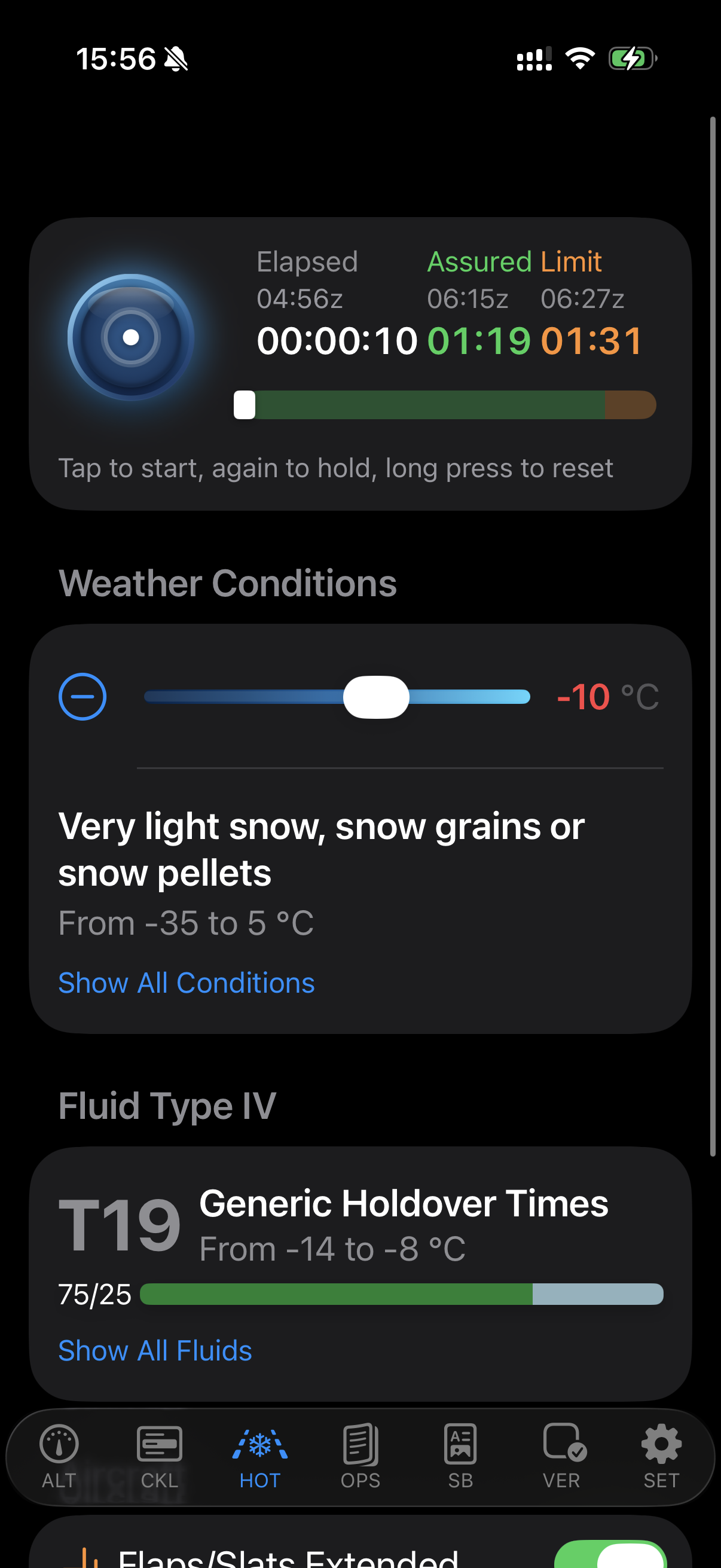
Version 4.5 replaces both data sets with the Winter 2026-27 editions. Each authority now carries 56 tables — up from 50 on the FAA side and 53 on the Transport Canada side. Four fluids join the list: LNT Solutions P250 in Type II, and LNT Solutions P450, MAX TECH MTL 4-EG and MAX TECH MTL 4-PG in Type IV. One leaves: AVIAFLUID AVIAFlight EG has been withdrawn by the publishers. Its PG counterpart is unaffected and remains in the tables.
The Type III entries for AllClear AeroClear MAX have been renamed. What used to read “applied unheated on low / middle / high speed aircraft” is now “applied unheated — low / middle / high speed ramp test”, matching the publishers’ wording. The fluid and its numbers are the same; only the label changed.
The more useful structural change is that the two sources now agree. The FAA tables have gained Generic Active Frost entries for Types II, III and IV, which previously existed only on the Transport Canada side. Both sources now expose the same 56 tables and the same eleven precipitation conditions, so switching between FAA and TCA no longer changes which weather types are on offer — it only changes the numbers, which is the only thing it should ever have changed.
One note on numbering, for anyone who knows the tables by heart: the generic Type IV table is number 20 this season. It was 19 last year. That shift is not the withdrawn fluid — it is the new Generic Active Frost entry slotting in ahead of it.
The release also drops three legacy table files that had been riding along inside the app without ever being read. That trims about 2.2 MB from the installed app; the download itself barely moves, because XML compresses extremely well.
As always: sQRH is an aid, not an authority. The pilot in command remains responsible for determining that the aircraft is clean before takeoff, and the official tables and your operator’s procedures are what govern.
Full details on the sQRH app page. Get the update on the App Store — free for existing owners.